Skip to content
  • 1-on-1 live classes
  • Female teachers

Online Quran classes for children

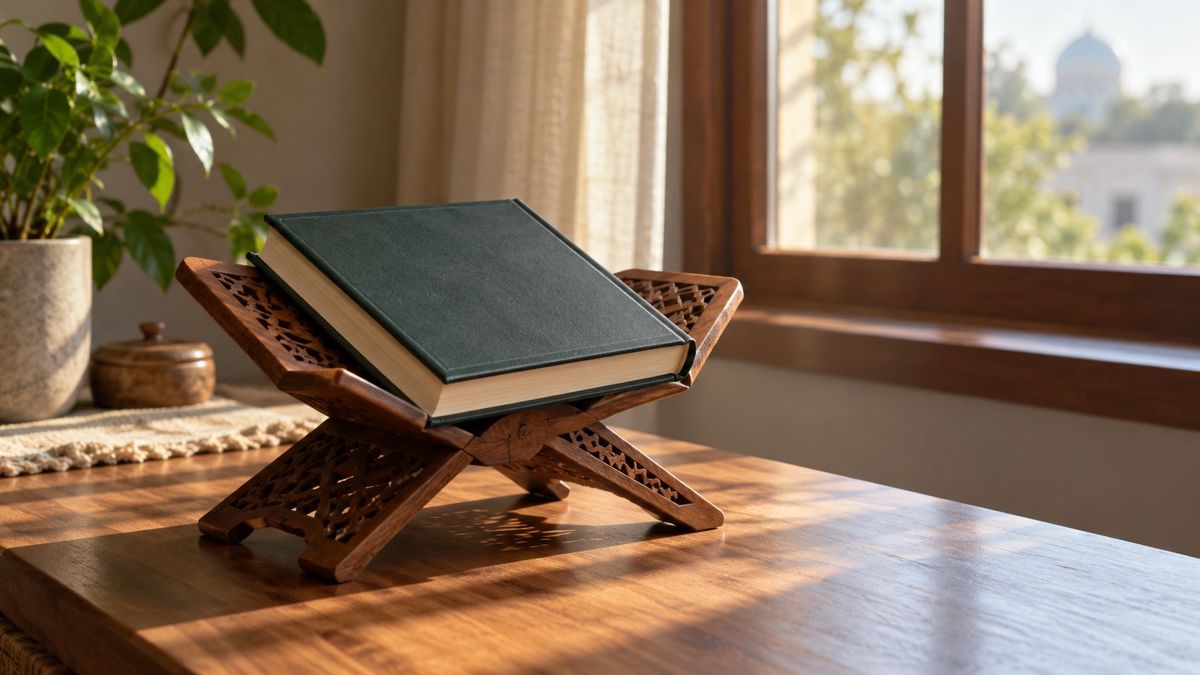
Closed Quran on a wooden rehal beside a sunlit window

Step 2 of our curriculum

Tajweed rules for kids, taught one-to-one online

Simple, patient lessons on how to pronounce each letter and apply the rules of recitation, led by a teacher who holds an ijazah in Tajweed. Free 3-day trial class.

  • Correct pronunciation, step by step
  • Rules practiced in short Quran passages
  • Private one-to-one Zoom classes

What is Tajweed and why does it matter for children?

Tajweed is the set of rules for reciting the Quran correctly, giving each letter its proper sound and each sound its proper length. It is how the Quran has been passed down in recitation, and learning it early helps a child form good habits before mistakes become fixed.

Ustadha Ayesha Azmat holds an ijazah with a sanad in Tajweed-ul-Quran, Hafs 'an 'Asim. She teaches the rules in plain words and short steps, so a child learns what to do and why, without being overwhelmed.

Which Tajweed rules does Step 2 cover?

  • Makharij: the exact places letters come from, so similar sounds are not mixed up.
  • Noon sakinah and tanween: the rules of idhhar, idgham, iqlab and ikhfa.
  • Meem sakinah: how the letter meem is read when it carries a sukoon.
  • Ghunnah and qalqalah: the nasal sound and the slight echo some letters have.
  • Madd: the natural and extended lengths of a sound.

Rules are introduced one at a time, in an order that suits your child's age. Older children may cover more in a term, while younger ones spend longer on each rule.

How are the rules taught in a live class?

Each class is private, 30 minutes and live on Zoom. The teacher introduces one rule using a digital pen and on-screen slides, says the sound for your child to hear, and then asks your child to repeat it. After that, your child applies the rule while reading short Quran passages, and the teacher corrects gently.

Positive reinforcement and reward stickers keep the mood encouraging, and earlier rules are revised often so they stay in mind. If a child is unsure, the teacher can re-explain in English, Urdu or Arabic. You can see how this works in practice on our interactive learning page.

Tajweed takes time and regular practice, and children move at different speeds. Progress depends on your child's age, practice at home and regular attendance. We do not promise a date by which your child will master the rules, and we do not issue a Tajweed certificate or diploma.

What we can offer is careful teaching and honest feedback. After the trial class, the teacher will describe a realistic pace. The Core Tajweed track is three private 30-minute classes a week for $65 a month, with Tajweed and daily duas, and the other plans are open to you too. See tuition and schedules.

Where does Step 2 fit in the curriculum?

Step 2 follows Step 1: Noorani Qaida, when a child can read letters and vowel marks steadily. It leads to Step 3: Fluent reading. Children aged 7 to 10 often work on it in Junior Reciters.

Not sure where your child fits? Request the free trial class and the teacher will listen to your child read and suggest a starting point.

1-on-1 live classes Female teachers Step-by-step curriculum Free 3-day trial

How it works

  1. Request a free trial

    Fill in the short form or message us on WhatsApp.

  2. We match your child

    We arrange a trial class at a time that suits your time zone.

  3. Start the lessons

    Choose a plan after the trial, or stop if it is not right.

Include the country code, for example +1, +44 or +92. We reply to you on WhatsApp.

Questions about best kids quran in United States

At what age can children start learning Tajweed rules?

Children can start once they read letters and vowel marks with some steadiness, which is often around 7 or 8 but varies a great deal. Younger children may meet simple ideas such as correct sounds and madd early on. The teacher judges readiness by listening to your child, not by age alone, and will tell you honestly if more Qaida practice comes first.

Does my child need to finish Noorani Qaida first?

Usually yes, or at least be able to read the Qaida lessons without much help. Tajweed builds directly on knowing the letters, sounds and marks. If your child has learned these elsewhere, the teacher will listen during the trial class and confirm whether they can start Step 2 straight away or need a short refresher.

Is this too difficult for a child who does not speak Arabic?

No. The rules are taught as sounds and habits, not as Arabic grammar. The teacher has experience with children who do not speak Arabic at home, and she explains in English, Urdu or Arabic. Your child is not expected to know the language, only to listen carefully, repeat and practice a little between classes.

How can I help my child at home?

Listen to your child read the day's lesson for a few minutes and ask them to say the rule in their own words. You do not need to know Arabic or Tajweed yourself. Regular, short practice works better than a long session before class. The teacher can tell you what to focus on each week.

How do I request the free trial class?

Fill in the short form on the trial page or message us on WhatsApp. Your WhatsApp number is required so we can reply. We match a teacher, subject to availability, and book a time around your time zone. The trial class is free, and you can ask about weekend slots.

Ready to book the free trial? Fill in the short form or message us on WhatsApp and we will arrange a trial class for your child. Book a free trial Chat on WhatsApp

Book a free trial Chat on WhatsApp