
Skip to content
  • 1-on-1 live classes
  • Female teachers

Online Quran classes for children

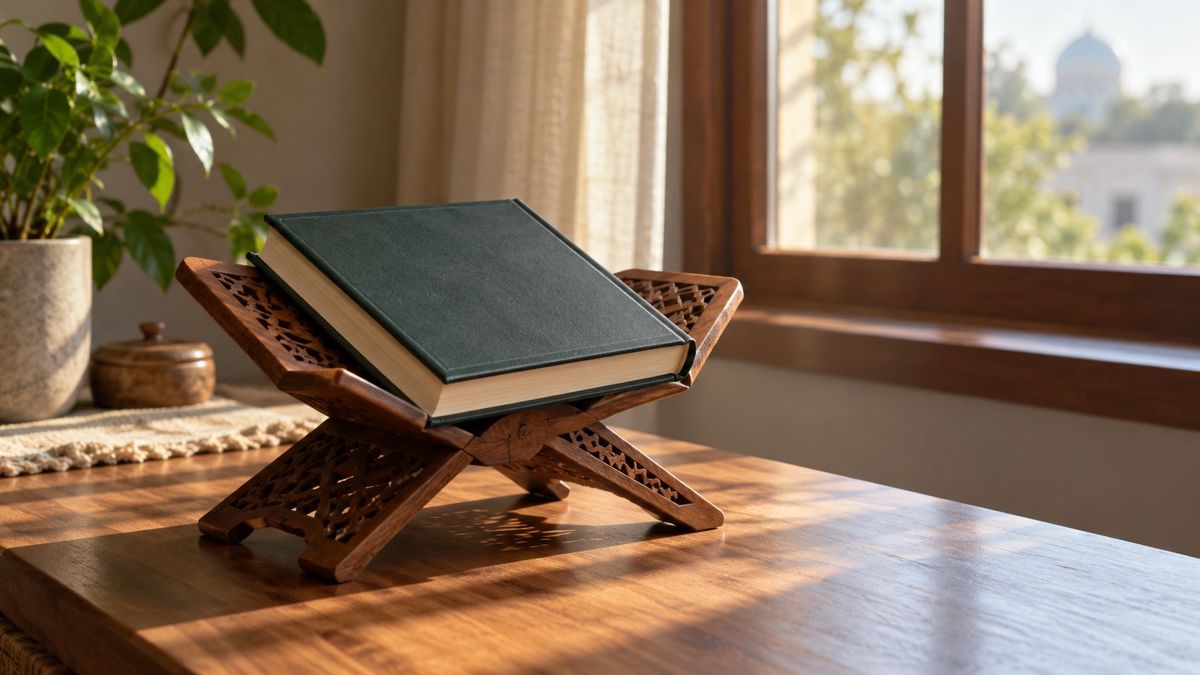
Closed Quran on a wooden rehal beside a sunlit window

Curriculum - Step 4

Daily duas for kids, with wudu and salah taught step by step

Children learn how to make wudu, pray salah and say the masnoon duas of the day, together with good manners and the stories of the Prophets.

  • Wudu and salah, one step at a time
  • Masnoon duas for daily life
  • Free 3-day trial class

What does Step 4 cover?

Step 4 turns Quran learning into daily life. Alongside reading, your child learns how to make wudu, how to pray salah and the short masnoon duas that Muslims say through the day. It is the part of the curriculum that children can use the same evening, at home with the family.

It sits after Step 3: Fluent reading, but younger children can begin learning short duas earlier, alongside their first lessons in the Little Mu'min program.

How are wudu and salah taught online?

Classes are live and one-to-one on Zoom, in 30-minute sessions. Ustadha Ayesha Azmat uses on-screen slides and a digital pen to show each step in order, then asks the child to say it back and to show it.

  • Wudu, in its order, with the dua and the reason behind each step.
  • How to stand, bow, prostrate and sit in salah.
  • What is recited in each part of the prayer, learned a little at a time.
  • The times of the five daily prayers, in simple words.

Details of the prayer can differ between schools of thought. Tell us what your family follows and ask how the teacher will approach it before you enroll.

Which daily duas do children learn?

We choose short, well-known masnoon duas and teach them through repetition, meaning and use. A child hears the dua, understands when it is said, and then says it at that moment at home.

  • Before and after eating.
  • Waking up and going to sleep.
  • Entering and leaving the home.
  • Entering and leaving the bathroom.
  • Going out, and entering the mosque.

Children who are too young to read the words can learn by listening and repeating, while older children read them from the slide.

Daily duas, manners and the stories of the Prophets are part of the classes. A child may learn to greet with salam, to thank their parents, to be honest and to be kind to siblings and neighbors. Stories of the Prophets are told in simple language, so that children connect the Quran with how they behave.

Positive reinforcement and reward stickers help children stay encouraged. Girls who would like a dedicated female-to-female space can read about the Young Muslimah Mentorship.

What to expect

Children learn prayer and duas at different speeds. Progress depends on your child's age, practice at home and regularity of classes. Prayer is learned most naturally alongside the family, so a parent praying with the child makes a real difference.

After the trial class, the teacher will describe a realistic pace. See the monthly plans or ask for a free 3-day trial, subject to teacher availability.

1-on-1 live classes Female teachers Step-by-step curriculum Free 3-day trial

How it works

  1. Request a free trial

    Fill in the short form or message us on WhatsApp.

  2. We match your child

    We arrange a trial class at a time that suits your time zone.

  3. Start the lessons

    Choose a plan after the trial, or stop if it is not right.

Include the country code, for example +1, +44 or +92. We reply to you on WhatsApp.

Questions about best kids quran in United States

At what age can a child start learning salah and duas?

Young children can begin with short duas by listening and repeating. Learning the full prayer usually fits older children better, but there is no single age. The teacher will suggest a gentle starting point after meeting your child in the trial class, based on their age and attention.

Do you teach the prayer according to a particular school of thought?

Details of the prayer can differ between schools of thought, and we do not issue rulings. Tell us what your family follows when you message us on WhatsApp at +92 305 9637306, and ask how the teacher will approach it. It is better to ask before enrolling than after.

Is Step 4 taught separately from Quran reading?

It can be taught alongside reading. Many families choose the Core Tajweed plan, which includes Tajweed and daily duas. The teacher will talk with you about how to balance reading, duas and prayer in a 30-minute class so your child is not overloaded.

Will my child be able to pray on their own afterwards?

We cannot promise a result, because it depends on age, practice at home and regularity. What we do is teach each step clearly and ask your child to practice it with you. Parents who pray beside their children help the lessons stay in daily life.

Should a parent stay nearby during class?

Classes are private and one-to-one. Parents are welcome to sit nearby, and we suggest a parent stays close for young children. For wudu and salah it also helps you see what your child is learning, so you can practice together at home.

Ready to book the free trial? Fill in the short form or message us on WhatsApp and we will arrange a trial class for your child. Book a free trial Chat on WhatsApp

Book a free trial Chat on WhatsApp